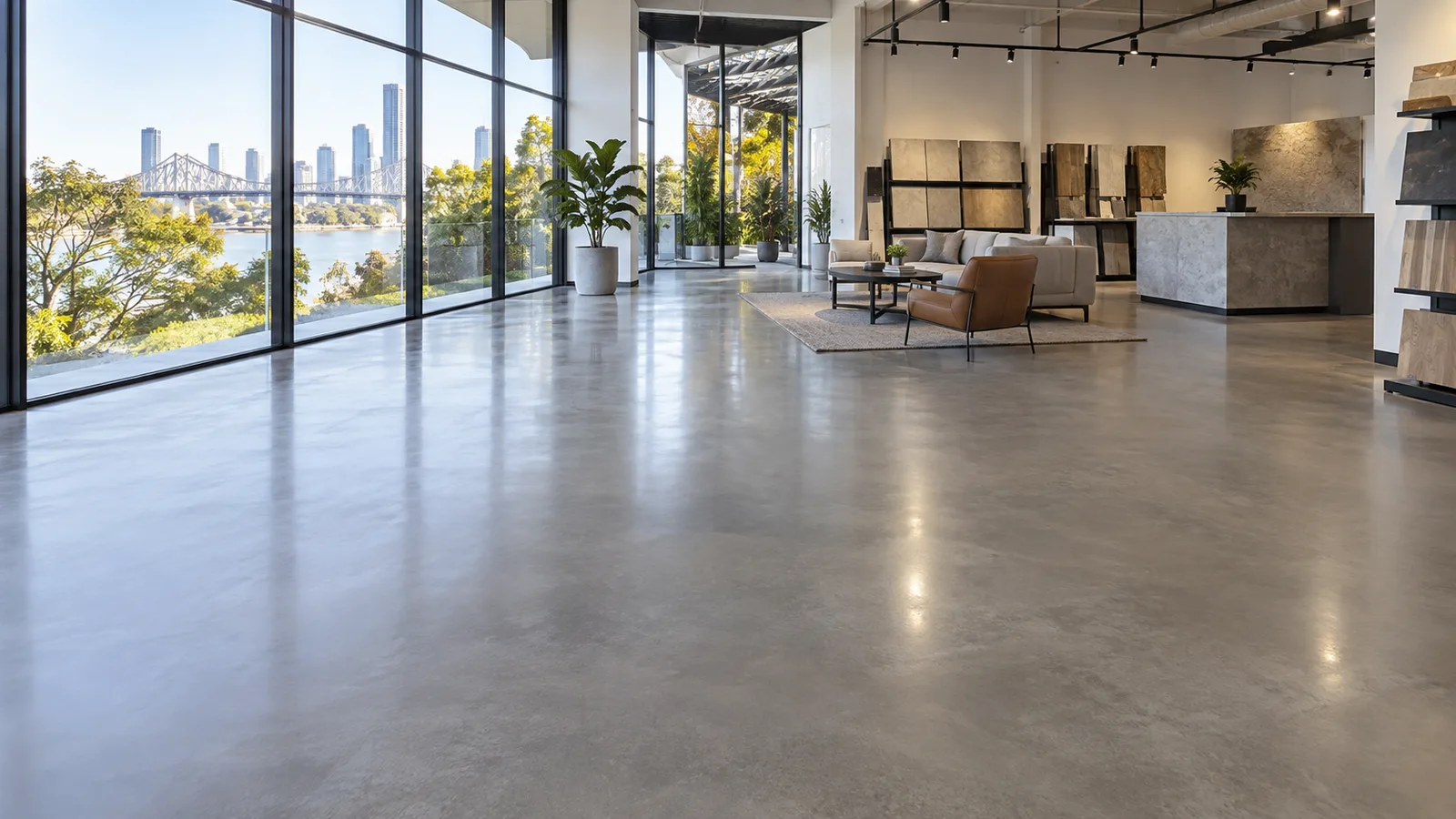
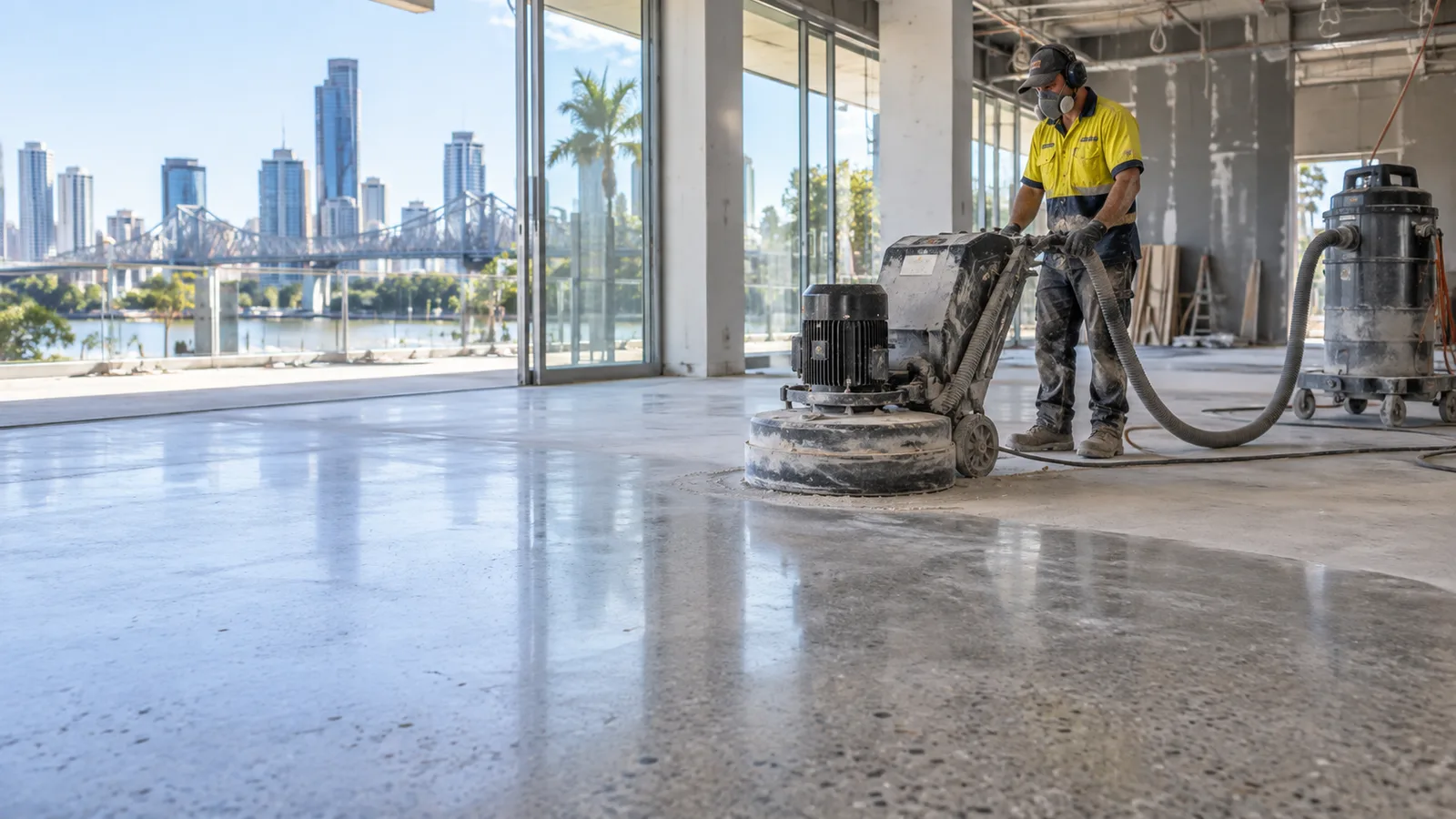
The right estimate begins with the real work: your slab, finish, floor area and access.
Our guide to Polished Concrete Cost In Brisbane explains the factors that move a price up or down, from the condition of the existing slab and the amount of grinding required to edges, repairs and the level of sheen you choose.
Tell us about the project to prepare a useful brief before asking for a site-specific quote. A few photos, an approximate floor area and notes on access or timing make it much easier to discuss a realistic budget and the finish that suits it.
BRISBANE · QUEENSLAND
WHAT SHAPES A QUOTE
Price follows the real work.
There is no useful single rate for every polished concrete floor. The same square metre can require very different preparation depending on the slab below, the finish above and the way the room is accessed. A clear quotation should explain those assumptions rather than hiding them inside one number.
01
The slab
The condition of the existing concrete is often the biggest unknown. Old tiles may leave adhesive; paint or epoxy can require removal; cracks and patch repairs can become visible after grinding. Concrete hardness and flatness influence tooling and time. A new slab can be planned for polishing, but the pour quality still matters. Ask which preparation is included, what a sample area could reveal and how unexpected defects would be handled before extra work is approved.
02
The finish
A minimal exposure finish and a deep aggregate cut take different amounts of grinding. Higher sheen requires additional refinement, and edge work may need hand tooling where large machines cannot reach. Stain protection and any specified treatment add to the system. The best finish is the one that suits the slab and the room, so compare the exact exposure, sheen and protection described in each quote. A small sample can help avoid paying for a look that the slab cannot realistically provide.
03
The access
An open ground-floor room is different from several small rooms with narrow doors, stairs or occupied furniture. Moving equipment, containing dust and working around other trades take time. Commercial projects may require after-hours work or staged access so the business can continue operating. Ask who clears the area, which services and power are available, and whether thresholds or tight edges need separate attention. These practical conditions should be discussed before a price is treated as final.
04
The area
Larger clear areas can spread set-up time across more floor, while a small space may still require the same equipment delivery and preparation. A layout broken by walls, cabinetry and narrow passages adds handwork. The measure should distinguish the total floor area from parts that cannot be polished or require a different detail. If you are comparing quotes, check whether edges, cupboards, steps and separate rooms are included in the measured area.
05
The use
A home, café, showroom or workshop may need a different approach to sheen, protection and maintenance. Footwear, food spills, vehicle traffic and cleaning methods change what a floor needs to withstand. The most reflective sample is not always the most suitable for the use. Explain your routine and any special risks before the finish is specified. A quote should identify the system, the expected appearance and the care required, not simply promise a generic polished look.
06
The care
A floor has an ongoing cost as well as an installation cost. Mechanical polishing and topical coatings have different wear and renewal patterns. Cleaning with compatible products, removing grit and protecting furniture feet can support appearance over time. Ask whether resealing is expected, how a damaged area could be repaired and what care instructions will be handed over. A slightly cheaper installation may be less attractive if its future maintenance does not fit the way the space is used.
THE PREPARATION QUESTION
What lies below the finish?
Ask for a site inspection where practical, particularly in a renovation. The surface visible today may hide old adhesive, incompatible coatings, moisture or repairs. Some of these can be identified immediately; others only become clear during a sample grind. A useful scope says what has been allowed for and what happens if the condition changes once work starts.
Preparation is not an optional extra to be removed from the quote. It creates the surface that receives the finish. If two quotes differ sharply, compare the described removal, crack treatment, edge work and protective steps before assuming the same result is being offered. Photographs of the existing slab and its history can make that conversation more precise.
COMPARE LIKE WITH LIKE
Mechanical polish or grind and seal?
Mechanically polished concrete
The sheen is developed in the concrete by progressive diamond refinement. Exposure and gloss depend on the slab and the amount of grinding possible. Stain protection may be used, but the visual character is not created by a thick clear coating. Ask how the floor will be maintained, which areas need hand finishing and whether the slab can achieve the desired look.
Grind and seal
The slab is ground to the chosen exposure, then a topical coating provides the finished sheen and protection. It can be a good fit for certain budgets and existing slabs, but the coating has its own wear and resealing cycle. Ask which product is specified, whether moisture or sunlight affects it, and how the floor will look and feel after years of normal use.
The two options should be quoted and compared as distinct systems. A lower initial price is only one part of the decision. Consider the desired character, expected traffic, cleaning and future care before choosing. If an existing slab is unpredictable, a sample area can make either option easier to assess.
BEFORE YOU ACCEPT A QUOTE
Seven details worth checking.
Which areas are measured, and are edge details or small rooms included?
What coatings, adhesives or contaminants will be removed?
How will cracks, repairs and uneven areas be assessed?
What exposure, sheen and protection system is specified?
How will dust, access and nearby finishes be managed?
When can the space be used, and what weather or curing factors may affect timing?
What cleaning, resealing or future maintenance is expected?
A written answer to these questions makes a price more useful. It also helps prevent a mismatch between the sample you liked and the floor that can be achieved on your site. If the contractor proposes a different finish after seeing the slab, ask for the reason and an updated scope before work continues.
QUESTIONS PEOPLE OFTEN ASK
What else can change the price?
Do cracks always need a repair?
Cracks should be assessed for cause and movement before a cosmetic treatment is chosen. Some repairs remain visible after polishing and become part of the floor's character. Others may need a different approach or specialist assessment. Ask how repair work is priced, what appearance is realistic and whether movement could continue.
A quote that simply promises an invisible repair may set the wrong expectation. A visible but carefully detailed repair can be the more honest choice, particularly when the original slab has moved or contains a different mix.
Can a new slab be cheaper to polish?
A slab planned for polishing may avoid removing old coverings and coatings, but it still depends on the quality of the pour, flatness, concrete mix and protection during construction. Coordination with the builder can reduce later surprises. Ask when polishing can begin, how the slab will be protected from other trades and what happens if curing marks, repairs or contamination appear before finishing.
Why do small rooms sometimes cost more per square metre?
Equipment delivery, dust control and set-up are required even when the floor area is small. Narrow rooms also increase edge work, and several separate spaces may require repeated moving and protection. A larger uninterrupted area can be more efficient. Compare the total scope and finished detail rather than treating an area rate alone as a complete description of the project.
PLAN WITH CONFIDENCE
Ask for a quote that explains itself.
A useful quote separates preparation, repairs, finish and protection, so you can make a considered decision about your Brisbane project. Start with photographs, approximate dimensions, site access and an example of the look you have in mind.